
Jun 15th – Beginning of observations
We received the orgnage springtails from “Stella’s springtails” about 1 month ago. After oberservation, it turns out the at starter colony was all juveniles, and our initial housing might just be too large given the low number of starters (~25). While there has been individual growth and adults are now clearly present, the total observed feels to be in a steady decline, and no eggs or hatchlings have been seen. The housing container is 4 x 8 with approx a 1.5 inch depth (one of the possible problems)
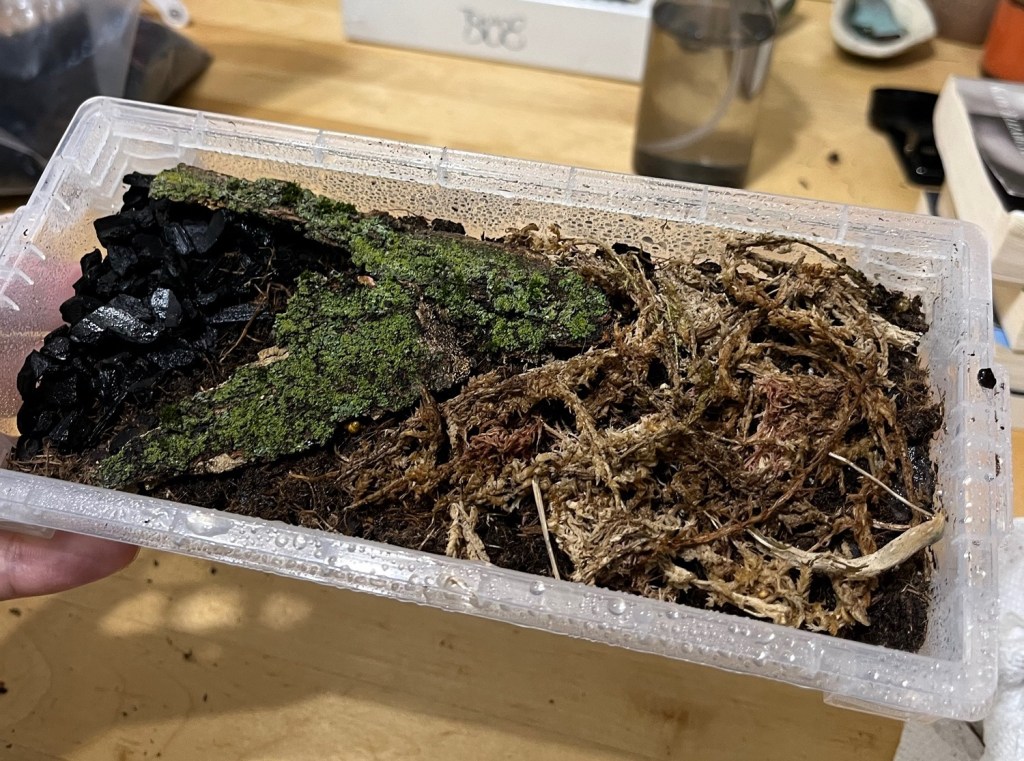
Physical observations
- Slower moving than whites, but larger when fully grown.
- Seem to bury, but reasoning (breeding, death, moisture retention) unclear
- Will feed out in the open
- Preference for fish food over nutritional yeast, may experiment with slime
- Can feign death (curled posture). If unsure, leace open air for a few minutes to see if awaken
Current concerns
- The decline in numbers
- Lack of breeding
Potential next steps for potential resolution
- Replace dried spaghum moss with live, soaked moss. Help maintain moisture without constant spraying
- Change to new container with more depth, or at least a greater depth to surface area ratio
We will start with the moss replacement, and if things do not appear to improve can try old container. Possibly the original one the whites were in? Will have to accept fact a new starter colony may be needed.
———–
June 15th (2nd look)
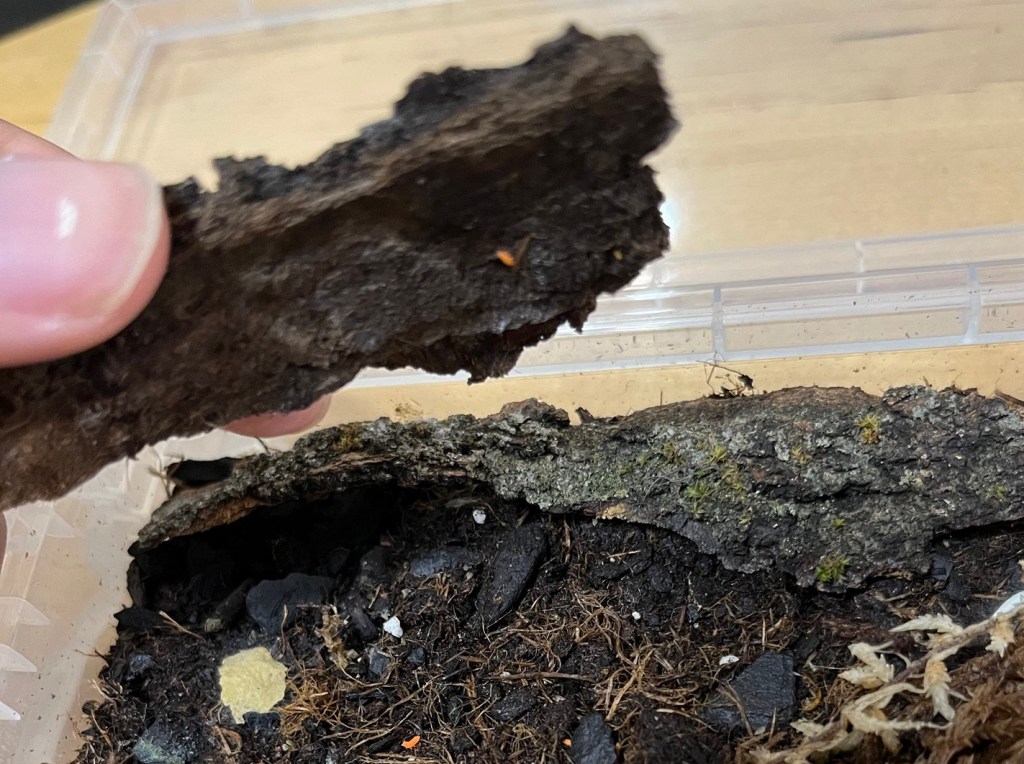
We were only observing two for the last couple days which was worrying, however lifting up one of the wood pieces showed 6 on the underside of the wood. Wood hiding places may be preferred spots to even moss?
——
June 16th
We switched out the old spaghum moss for the fresh bought. Very clear that the moss used before was mostly dead and didn’t retain water as well as the new stuff. Curious if it’ll make a difference. Also replaced wood as it was feeling too degraded. Hopefully swapping all this out will help with mold.
Removing all the debris did reveal more springtails. Maybe 8-10 in total visible. Still low. All seem hidden now after competing enclosure turnover.
Trying new food method. Pieces broken into 2-3 medium pieces. 3-4 placements. Let’s try replacing at a faster rate.

—-
June 18th
The new moss has certainly helped with humidity (that and the heat spike) tho no more springtails under log. Maybe they really preferred the slightly rotted wood, and the new dry just isn’t cutting it. Also, DO NOT place food under wood. Keep it visible so you know when to replace. Back to broken bits of food in 2-4 clumps. Placing only on flat surfaces. Going to try new method of cleaning that doesn’t require forceps.
Also just an observation that see them in the soil much more often than on the moss like we did in the past. Possibly adults prefer to be underground while the nymphs spend more time on the surface. (Easier to burrow?)
June 24th
Feeding on a piece of bark in the same place seems to be working well to make sure they eat. Appear a bit fatter too so that’s good. Though needing to change out food every couple days as fungus grows quickly. Next time choose bark that isn’t covered in lichen may just me more prone to fungal spores.

June 27th
Beginning process of re-homing the orange springtails to a smaller, but deeper container. Built a chamber with super glue and stacking 2 smalls together only to realize a clearer, sturdier, more air tight option with the same dimensions was at my local grocery store for 6 dollars.

Things we will change for this chamber:
- Wood charcoal base layer for water
- At least 1.5 inch dirt layer. Soak for 24 hrs before adding springtails
- Soak moss and wood (clean no moss) for 15 min before adding to container
- Leave a flat surface area for easy feeding to start.
June 29th
Over the past 2 days we got the new chamber set up and began the process of transferring into the new home. Sadly, my trick to get them on the log piece to transfer them failed as (of course) the day I decide to move them is the day they all avoid the bark at all costs despite being covered in food.
We moved around some dirt and moved them one at a time carefully using a wetted, fine brush. Was able to transfer 8 or so. There are still others but will try again over the next few days as to not completely turn over the old terrarium. Maybe the log will work on the remaining.
Picture of new enclosure. I’m pretty happy with the wetness level, depth, and less surface area. Hopefully it works out.

Also when picking out springtails, there are some obvious instar differences. One even appeared to be molting. Could there have in fact been eggs? If so, the majority of the offspring either didn’t hatch or didn’t survive. This could also mean the wetness level is much required for successful incubation.
July 3rd
A summary update on the process of building the new home and what we’ve seen so far:
….well well well irony doth strike. On looking at the old container for stragglers, I happened upon a juvenile and what appeared to be a recent hatchling for the first time (still white in color). Maybe I acted too hastily? Either way, it’s hard for me to say that the new container isn’t better suited, but now I think I’ll need to keep a closer eye on the old one and still clean it on occasion in case new hatchlings appear.
 zooplank.com